

TL;DR
- Chews are cut 3 to 10 mm thick and dried at 50 to 70°C until moisture falls to 10 to 15%.
- One manufacturer lists 350 kcal and 6 g of fiber per 100 g, so a 10 g chew is about 35 kcal.
- Kept cool and dry, a properly dried chew is rated for up to 12 months on the shelf.
- The bag tells you more than the marketing does, and FDA publishes storage and handling guidance for pet treats.
Short version: a dried sweet potato chew is mostly sweet potato and patience. How dry it got matters more than how it is described.
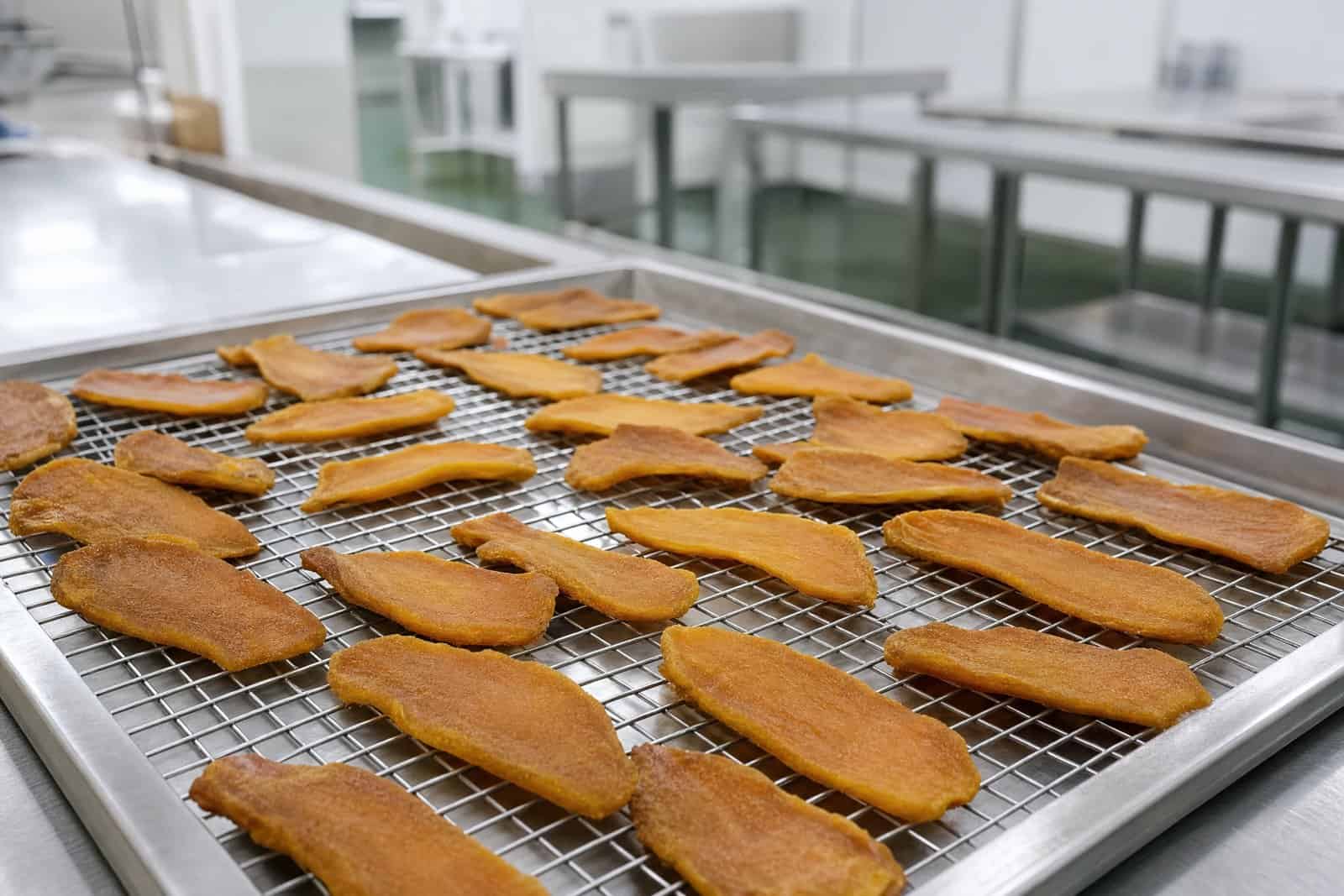
A dried sweet potato dog treat is a sweet potato that has been peeled, sliced and dried slowly until its moisture content is down to 10 to 15 percent. That drying step, done at a low temperature, is what turns a perishable root into something that survives a cupboard.
What goes into a dried chew
The ingredient list is short because the product is simple. Qualitex Global makes dried sweet potato dog treats in Vietnam and describes its raw material as sweet potatoes from local farms, which it calls non-GMO and pesticide-free. They are washed, mechanically peeled and cut into slices between 3 and 10 mm thick.
Thickness is the first decision, because thin slices dry to a brittle crisp and thick ones stay chewy. A natural pre-treatment is applied before drying to limit oxidation, the browning that happens when cut flesh meets air.
How the drying step works
Low heat is the point. Drying at 50 to 70°C removes water without cooking the slice, which is why dried chews keep a sweet, earthy flavor instead of tasting toasted.
| Stage | What happens | Figure |
|---|---|---|
| Cutting | Peeled roots sliced to the chosen thickness | 3 to 10 mm |
| Pre-treatment | Natural treatment to limit oxidation | Applied before drying |
| Drying | Low-temperature drying | 50 to 70°C |
| Target moisture | Water content after drying | 10 to 15% |
| Testing | Microbial testing under HACCP and ISO standards | Per batch |
| Packing | Vacuum-sealed bags or bulk cartons | Retail or bulk |
What 100 g of dried chew contains
Drying concentrates everything, including the sugars. The figures below are the ones the manufacturer publishes per 100 g, and its page does not name the test that produced them, so treat them as a guide.
| Nutrient | Per 100 g |
|---|---|
| Calories | 350 kcal |
| Protein | 3 g |
| Fiber | 6 g |
| Carbohydrates | 80 g |
| Beta-carotene | 8,500 mcg |
| Vitamin A | 14,000 IU |
The calorie figure is the one owners tend to miss. At 3.5 kcal per gram, a 10 g chew is roughly 35 kcal, and that adds up quickly for a small dog. Ask your vet how many treats fit into a day for your dog.
Shelf life and storage
The same page rates its chews at up to 12 months when kept in a cool, dry place. The pack format matters here. Vacuum-sealed bags keep air away from the slices, while bulk cartons are meant for repacking by a retailer.
Whatever the format, storage guidance and handling advice for pet treats are published by the FDA Center for Veterinary Medicine, including the habit of saving the lot number in case a product has to be traced.
Questions worth asking before you buy
- What moisture level does the chew finish at, and how is it measured?
- Is the slice thickness stated on the pack?
- Can the maker show the microbial test report for the batch?
- How long is the shelf life, and under what storage conditions?
A chew is light and does not crush, so it travels well. If one is going into a trail pack, the dog hiking gear checklist on this site is a good companion for the rest of the kit.
The number to check first
Moisture. Every other claim on a bag of dried sweet potato treats, from shelf life to texture, follows from how dry the slice finished. If a supplier cannot tell you that number, the rest of the label deserves a closer look.


